 HOMEHOMEOUR STORYOUR STORYOUR STORYOUR STORYCULINARY SAFARICULINARY SAFARICUISINECUISINEART & CULTUREART & CULTUREART & CULTUREIMPACT & PURPOSEIMPACT & PURPOSEIMPACT & PURPOSEIMPACT & PURPOSEIMPACT & PURPOSESTAY CONNECTEDSTAY CONNECTEDSTAY CONNECTEDSTAY CONNECTEDCONTACT USOUR FIRST LOCATIONOKUHLE FOUNDATIONOKUHLE FOUNDATIONOKUHLE FOUNDATIONCHARITABLE IMPACT INVESTINGPARTNERSHIPSPARTNERSHIPSPRIVACY POLICYTERMS OF USEACCESSIBILITYCOOKIE PREFERENCESFREQUENTLY ASKED QUESTIONSTHE OKUHLE EXPERIENCEOKUHLE EXPERIENCEOKUHLE EXPERIENCEOKUHLE RESTAURANTS LLCOUR IMPACT MODELOUR IMPACT MODELOUR PURPOSECONNECT WITH USEXPLORE OUR FOUNDATIONDISCOVER OUR STORYHomeOur StoryCulinary SafariImpact & PurposeArt & CultureStay ConnectedOkuhle homeImpact Investing
CHANGE IS POSSIBLE
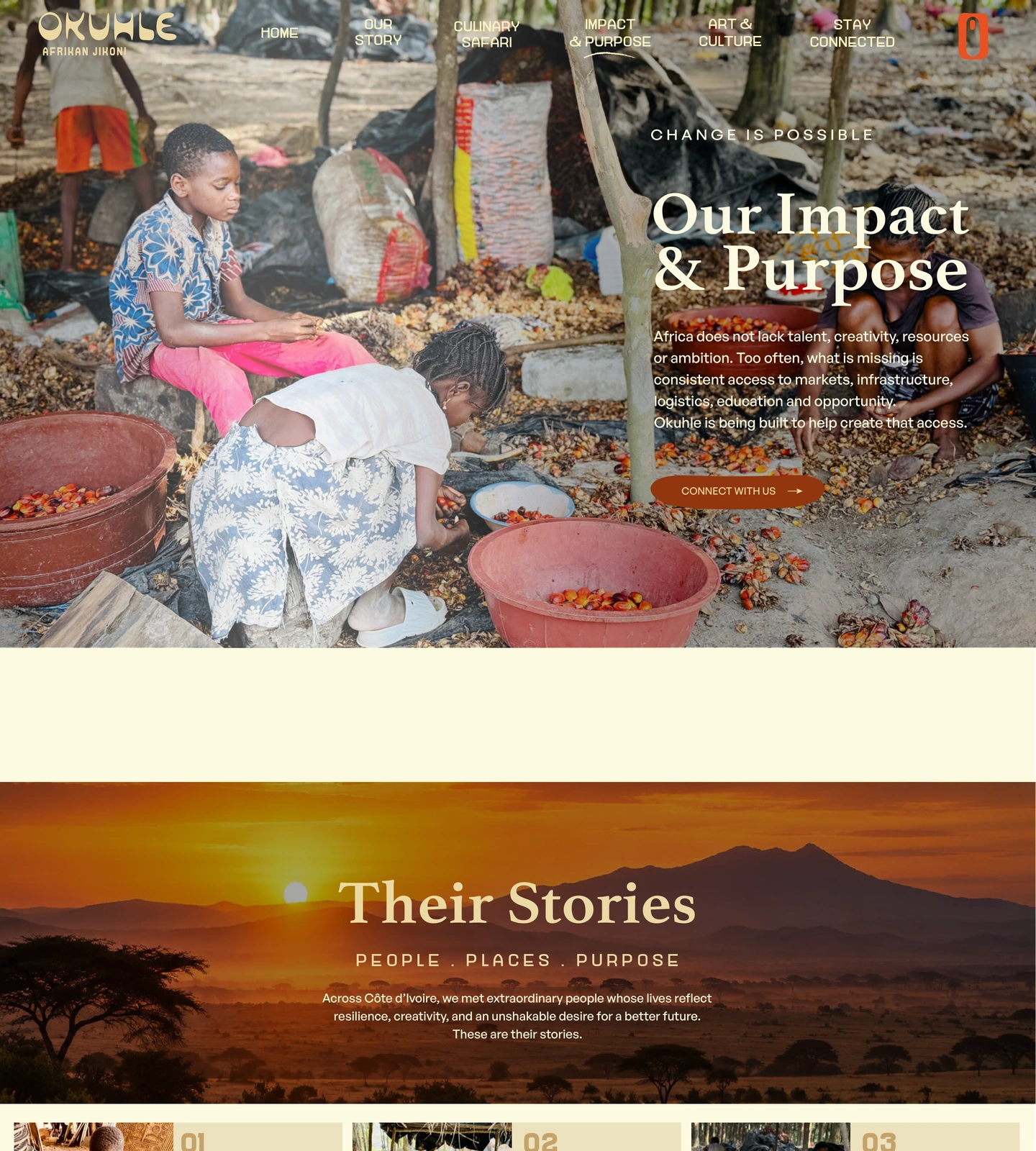
Our Impact & Purpose
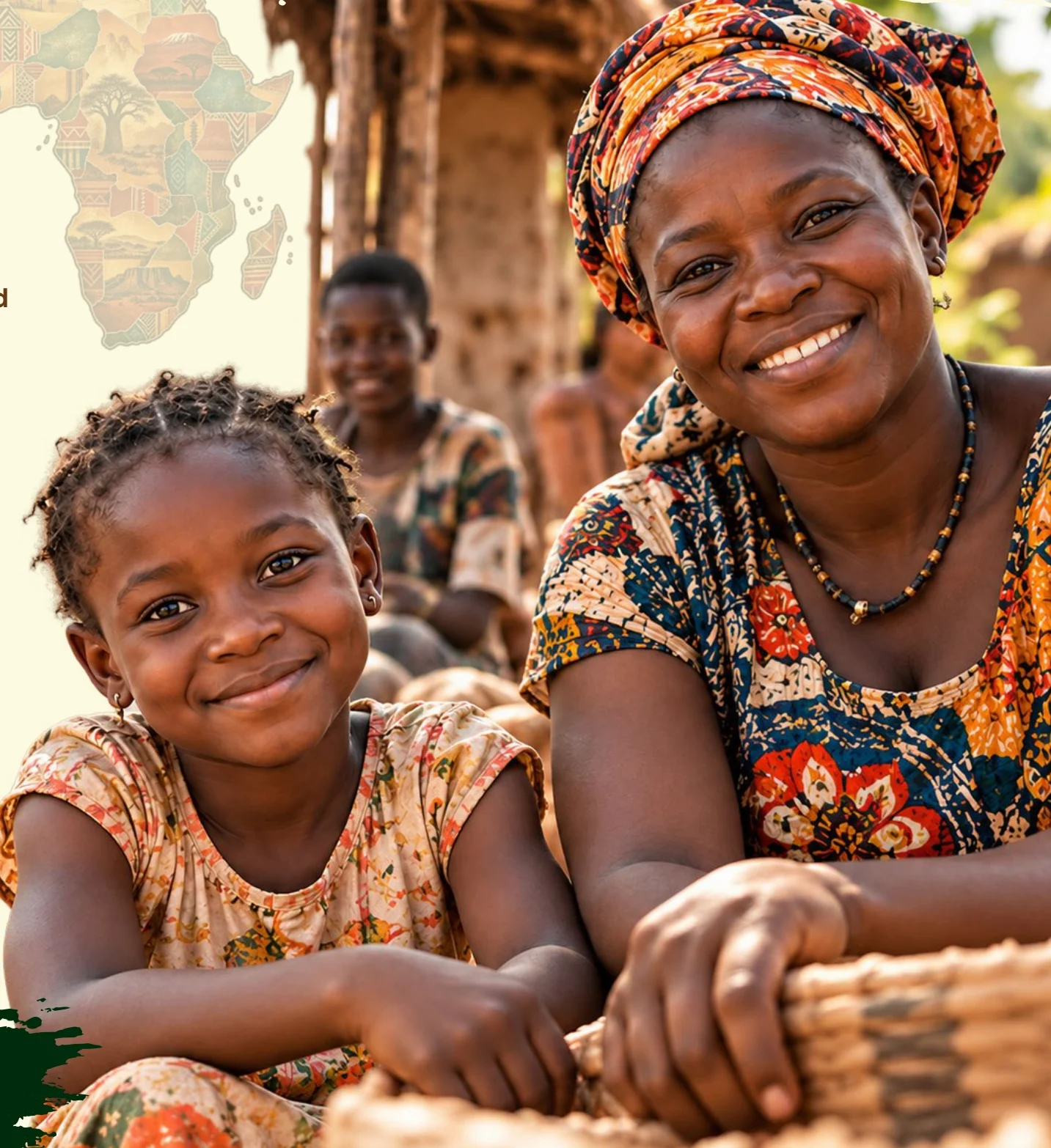
Africa does not lack talent, creativity, resources or ambition. Too often, what is missing is consistent access to markets, infrastructure, logistics, education and opportunity. Okuhle is being built to help create that access.
 CONNECT WITH US
Their Stories
PEOPLE . PLACES . PURPOSE
Across Côte d'Ivoire, we met extraordinary people whose lives reflect resilience, creativity, and an unshakable desire for a better future. These are their stories.
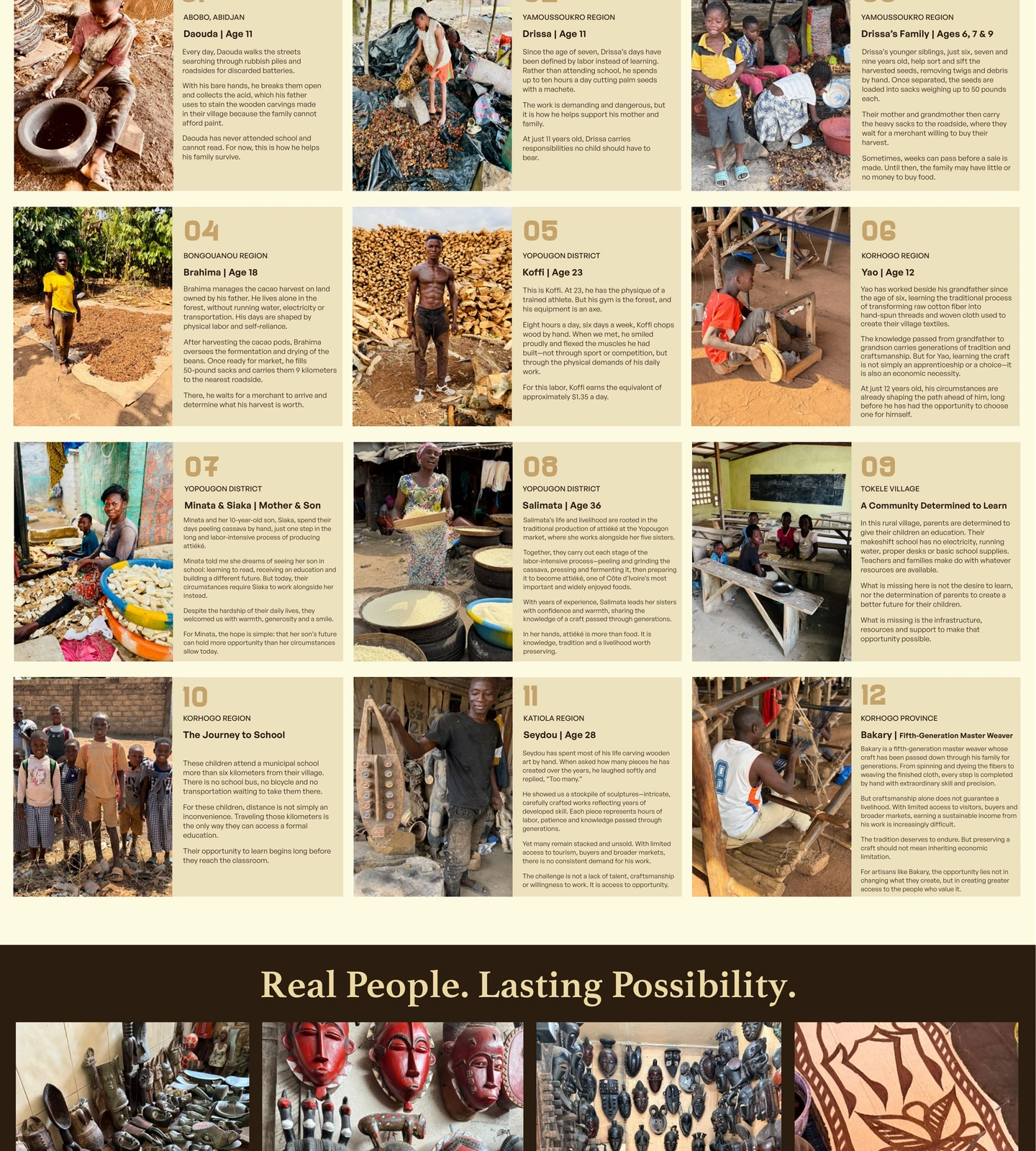
01 ABOBO, ABIDJAN
Daouda | Age 11
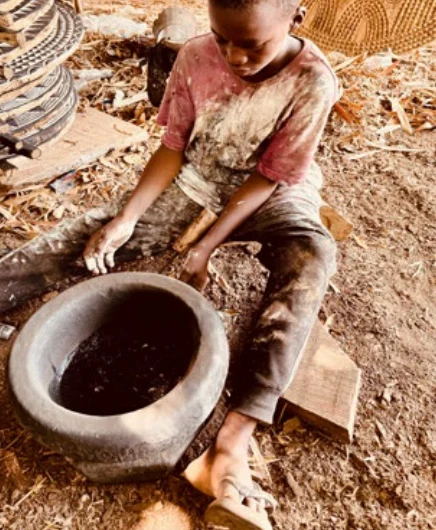
Every day, Daouda walks the streets searching through rubbish piles and roadsides for discarded batteries. With his bare hands, he breaks them open and collects the acid, which his father uses to stain the wooden carvings made in their village because the family cannot afford paint. Daouda has never attended school and cannot read. For now, this is how he helps his family survive.
02 YAMOUSSOUKRO REGION
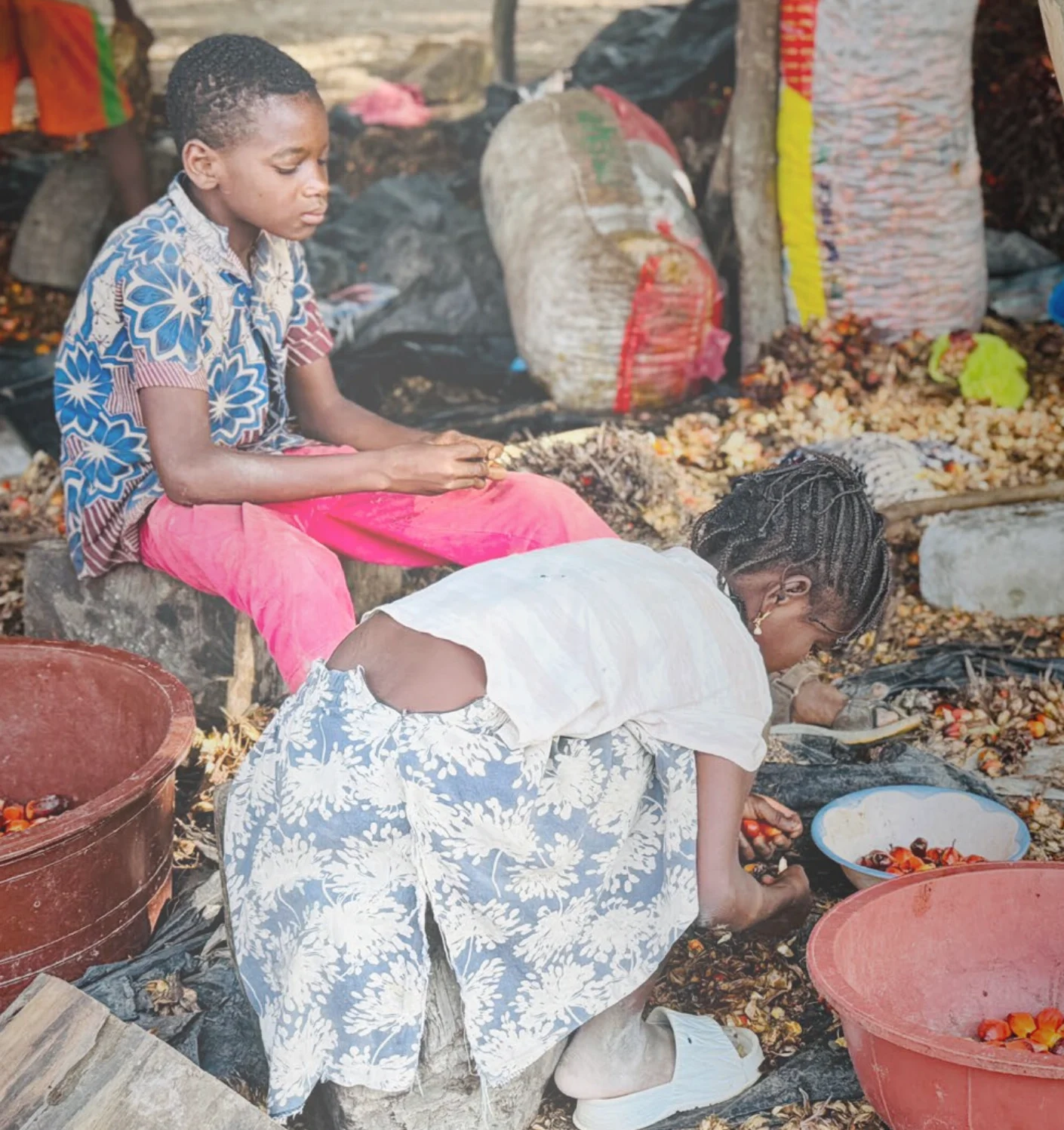
Drissa | Age 11
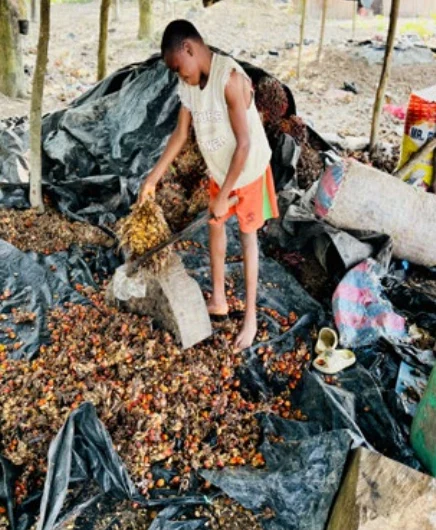
Since the age of seven, Drissa's days have been defined by labor instead of learning. Rather than attending school, he spends up to ten hours a day cutting palm seeds with a machete. The work is demanding and dangerous, but it is how he helps support his mother and family. At just 11 years old, Drissa carries responsibilities no child should have to bear.
03 YAMOUSSOUKRO REGION
Drissa's Family | Ages 6, 7 & 9
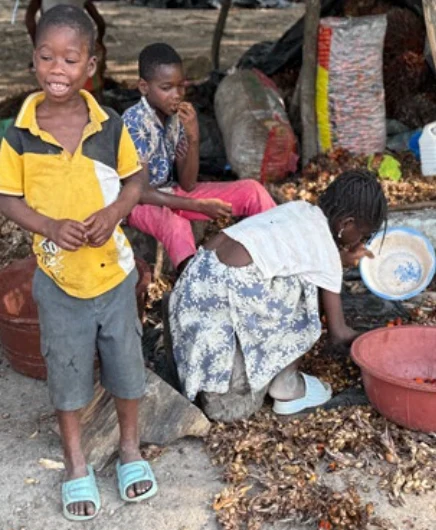
Drissa's younger siblings, just six, seven and nine years old, help sort and sift the harvested seeds, removing twigs and debris by hand. Once separated, the seeds are loaded into sacks weighing up to 50 pounds each. Their mother and grandmother then carry the heavy sacks to the roadside, where they wait for a merchant willing to buy their harvest. Sometimes, weeks can pass before a sale is made. Until then, the family may have little or no money to buy food.
04 BONGOUANOU REGION
Brahima | Age 18
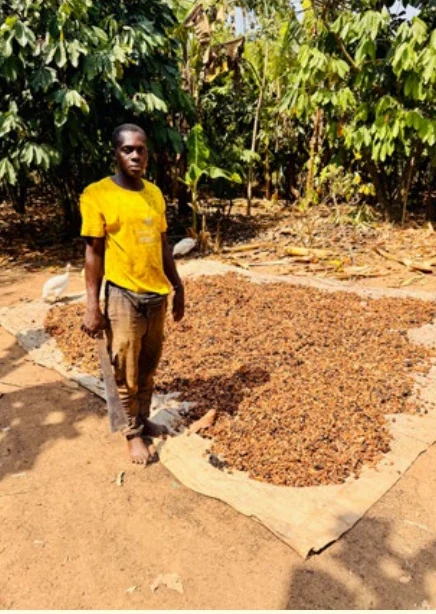
Brahima manages the cacao harvest on land owned by his father. He lives alone in the forest, without running water, electricity or transportation. His days are shaped by physical labor and self-reliance. After harvesting the cacao pods, Brahima oversees the fermentation and drying of the beans. Once ready for market, he fills 50-pound sacks and carries them 9 kilometers to the nearest roadside. There, he waits for a merchant to arrive and determine what his harvest is worth.
05 YOPOUGON DISTRICT
Koffi | Age 23
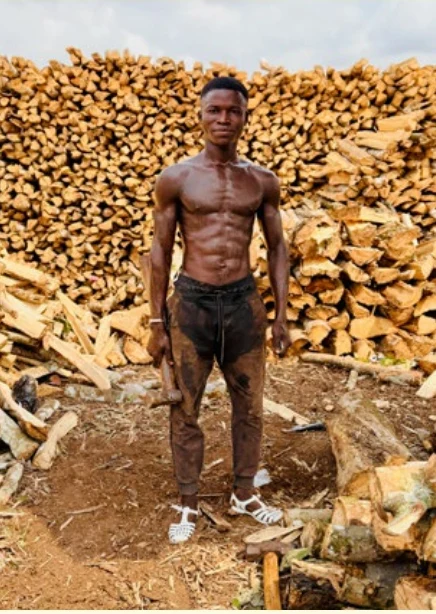
This is Koffi. At 23, he has the physique of a trained athlete. But his gym is the forest, and his equipment is an axe. Eight hours a day, six days a week, Koffi chops wood by hand. When we met, he smiled proudly and flexed the muscles he had built - not through sport or competition, but through the physical demands of his daily work. For this labor, Koffi earns the equivalent of approximately $1.35 a day.
06 KORHOGO REGION
Yao | Age 12
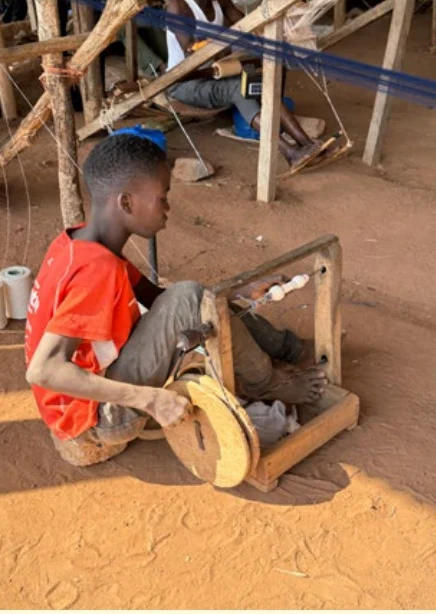
Yao has worked beside his grandfather since the age of six, learning the traditional process of transforming raw cotton fiber into hand-spun threads and woven cloth used to create their village textiles. The knowledge passed from grandfather to grandson carries generations of tradition and craftsmanship. But for Yao, learning the craft is not simply an apprenticeship or a choice - it is also an economic necessity. At just 12 years old, his circumstances are already shaping the path ahead of him, long before he has had the opportunity to choose one for himself.
07 YOPOUGON DISTRICT
Minata & Siaka | Mother & Son
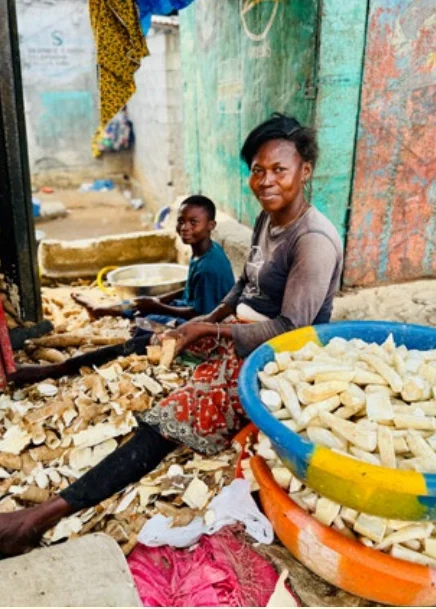
Minata and her 10-year-old son, Siaka, spend their days peeling cassava by hand, just one step in the long and labor-intensive process of producing attiéké. Minata told me she dreams of seeing her son in school: learning to read, receiving an education and building a different future. But today, their circumstances require Siaka to work alongside her instead. Despite the hardship of their daily lives, they welcomed us with warmth, generosity and a smile. For Minata, the hope is simple: that her son's future can hold more opportunity than her circumstances allow today.
08 YOPOUGON DISTRICT
Salimata | Age 36
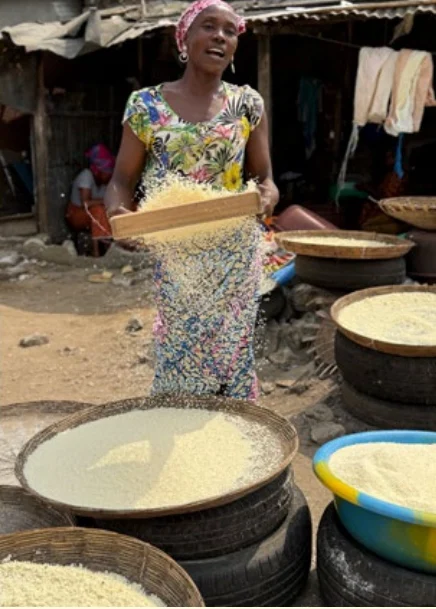
Salimata's life and livelihood are rooted in the traditional production of attiéké at the Yopougon market, where she works alongside her five sisters. Together, they carry out each stage of the labor-intensive process - peeling and grinding the cassava, pressing and fermenting it, then preparing it to become attiéké, one of Côte d'Ivoire's most important and widely enjoyed foods. With years of experience, Salimata leads her sisters with confidence and warmth, sharing the knowledge of a craft passed through generations. In her hands, attiéké is more than food. It is knowledge, tradition and a livelihood worth preserving.
09 TOKELE VILLAGE
A Community Determined to Learn
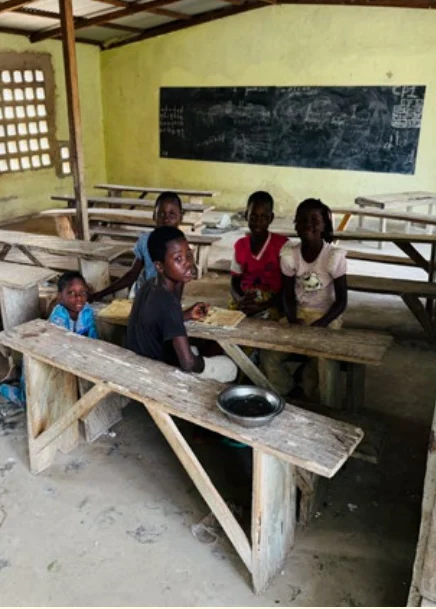
In this rural village, parents are determined to give their children an education. Their makeshift school has no electricity, running water, proper desks or basic school supplies. Teachers and families make do with whatever resources are available. What is missing here is not the desire to learn, nor the determination of parents to create a better future for their children. What is missing is the infrastructure, resources and support to make that opportunity possible.
10 KORHOGO REGION
The Journey to School
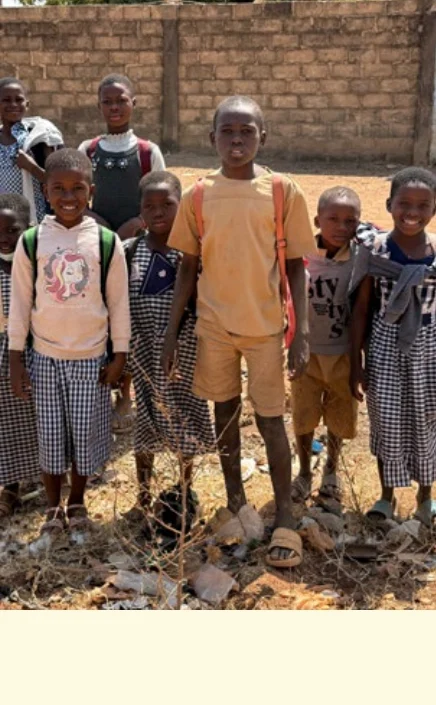
These children attend a municipal school more than six kilometers from their village. There is no school bus, no bicycle and no transportation waiting to take them there. For these children, distance is not simply an inconvenience. Traveling those kilometers is the only way they can access a formal education. Their opportunity to learn begins long before they reach the classroom.
11 KATIOLA REGION
Seydou | Age 28
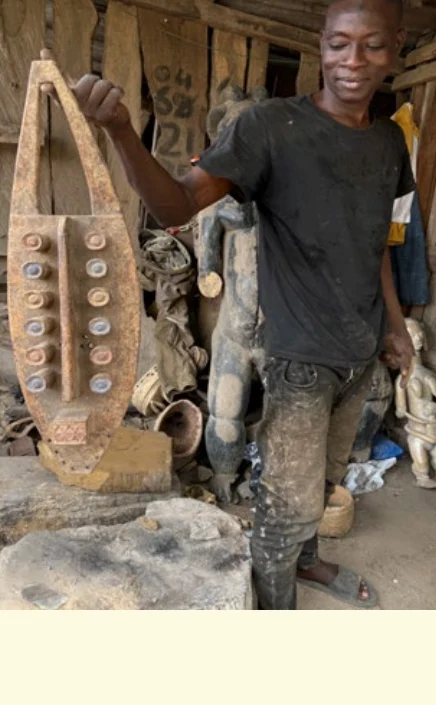
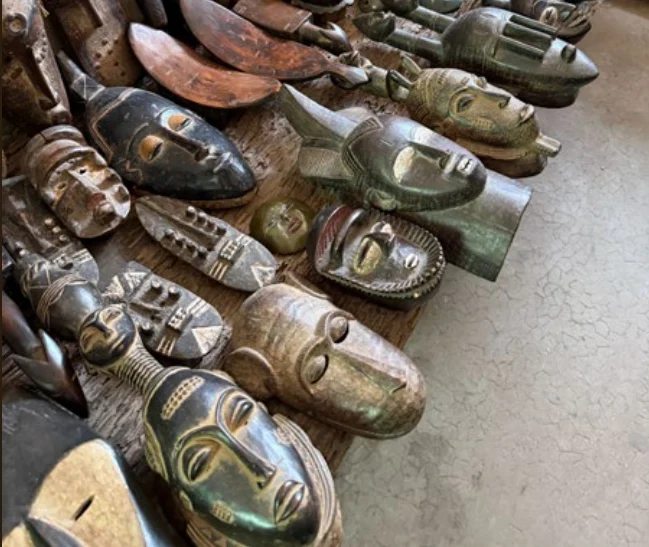
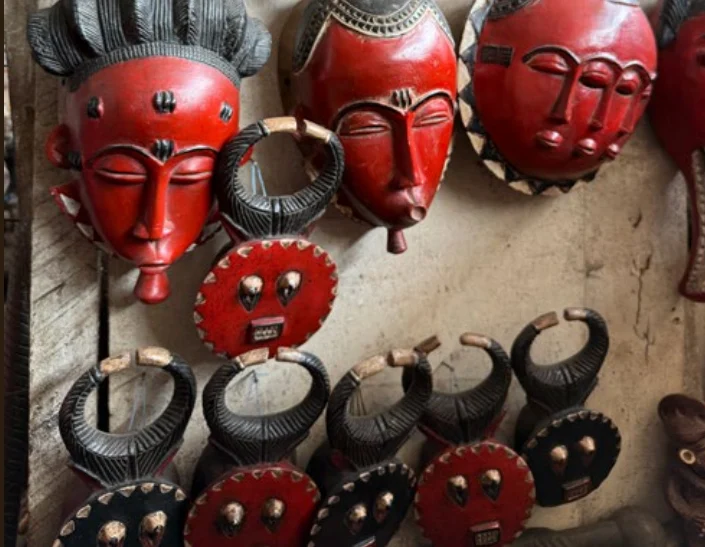
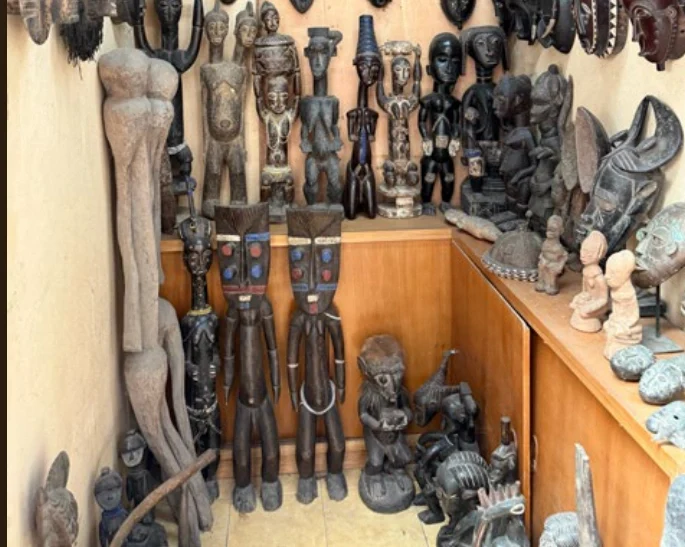
Seydou has spent most of his life carving wooden art by hand. When asked how many pieces he has created over the years, he laughed softly and replied, "Too many." He showed us a stockpile of sculptures - intricate, carefully crafted works reflecting years of developed skill. Each piece represents hours of labor, patience and knowledge passed through generations. Yet many remain stacked and unsold. With limited access to tourism, buyers and broader markets, there is no consistent demand for his work. The challenge is not a lack of talent, craftsmanship or willingness to work. It is access to opportunity.
12 KORHOGO PROVINCE
Bakary | Fifth-Generation Master Weaver
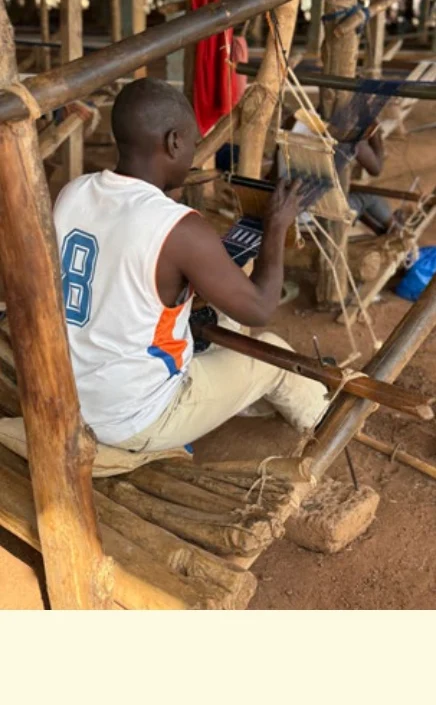
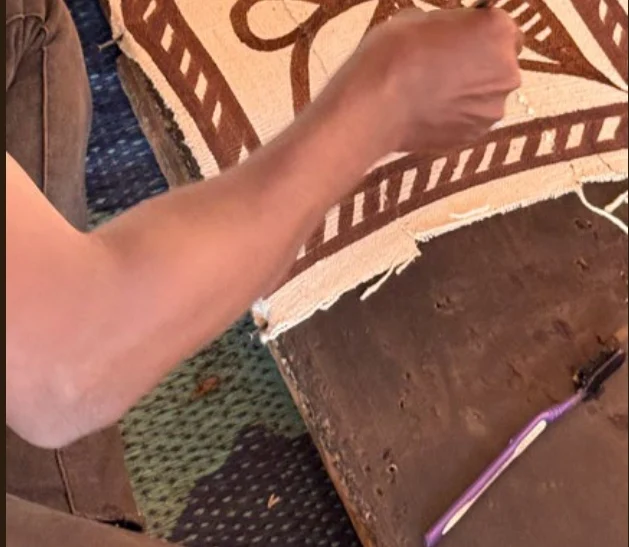
Bakary is a fifth-generation master weaver whose craft has been passed down through his family for generations. From spinning and dyeing the fibers to weaving the finished cloth, every step is completed by hand with extraordinary skill and precision. But craftsmanship alone does not guarantee a livelihood. With limited access to visitors, buyers and broader markets, earning a sustainable income from his work is increasingly difficult. The tradition deserves to endure. But preserving a craft should not mean inheriting economic limitation. For artisans like Bakary, the opportunity lies not in changing what they create, but in creating greater access to the people who value it.
Real People. Lasting Possibility.
Across Africa, there are thousands of stories like these - stories of extraordinary people, rich traditions, and remarkable talent too often limited by access to opportunity.
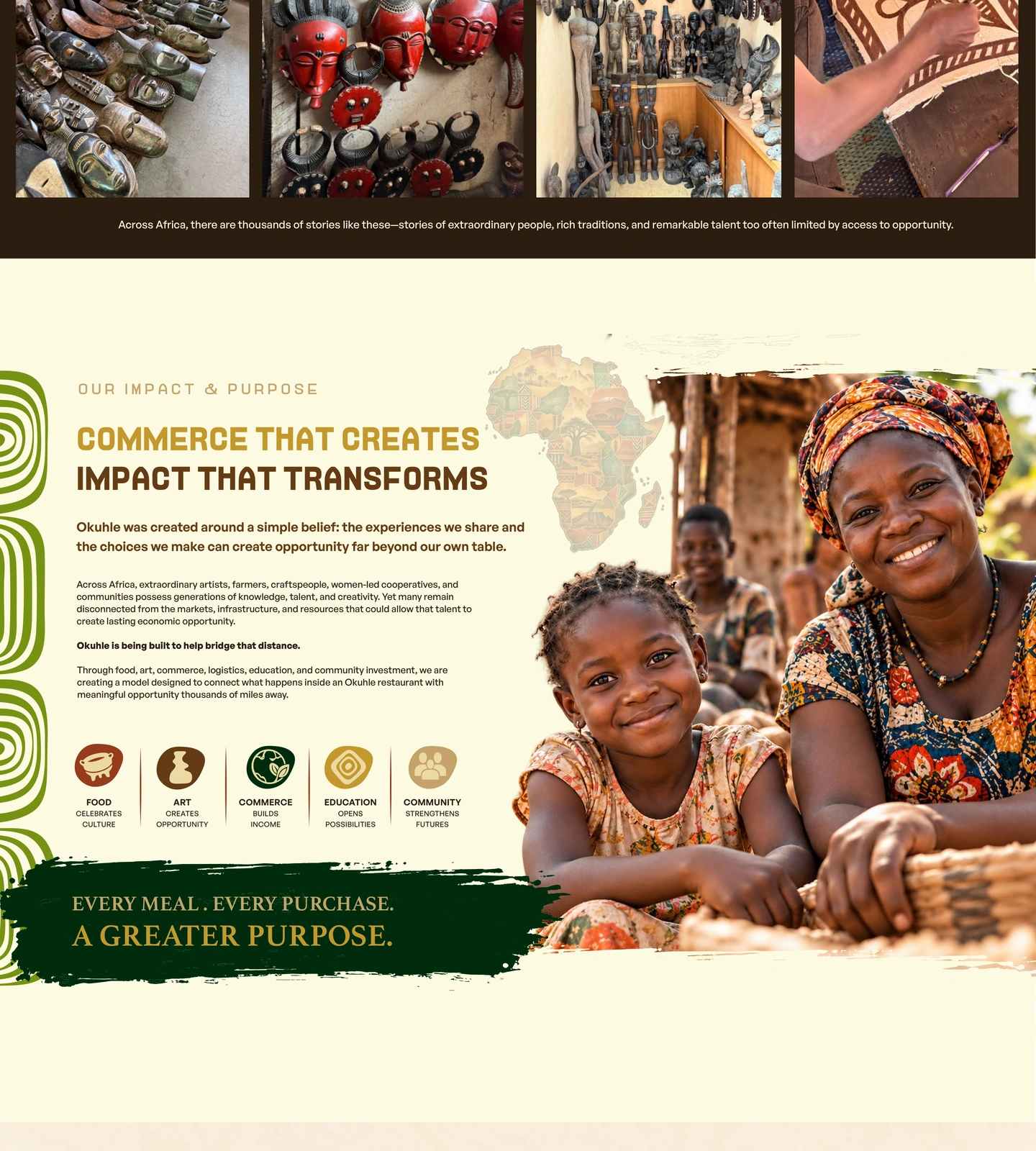
OUR IMPACT & PURPOSE
COMMERCE THAT CREATES IMPACT THAT TRANSFORMS
Okuhle was created around a simple belief: the experiences we share and the choices we make can create opportunity far beyond our own table. Across Africa, extraordinary artists, farmers, craftspeople, women-led cooperatives, and communities possess generations of knowledge, talent, and creativity. Yet many remain disconnected from the markets, infrastructure, and resources that could allow that talent to create lasting economic opportunity. Okuhle is being built to help bridge that distance. Through food, art, commerce, logistics, education, and community investment, we are creating a model designed to connect what happens inside an Okuhle restaurant with meaningful opportunity thousands of miles away.
FOOD CELEBRATES CULTURE · ART CREATES OPPORTUNITY · COMMERCE BUILDS INCOME · EDUCATION OPENS POSSIBILITIES · COMMUNITY STRENGTHENS FUTURES
EVERY MEAL . EVERY PURCHASE. A GREATER PURPOSE.
BEYOND TOURISM
A VISITOR SHOULD NOT HAVE TO ARRIVE FOR OPPORTUNITY TO ARRIVE
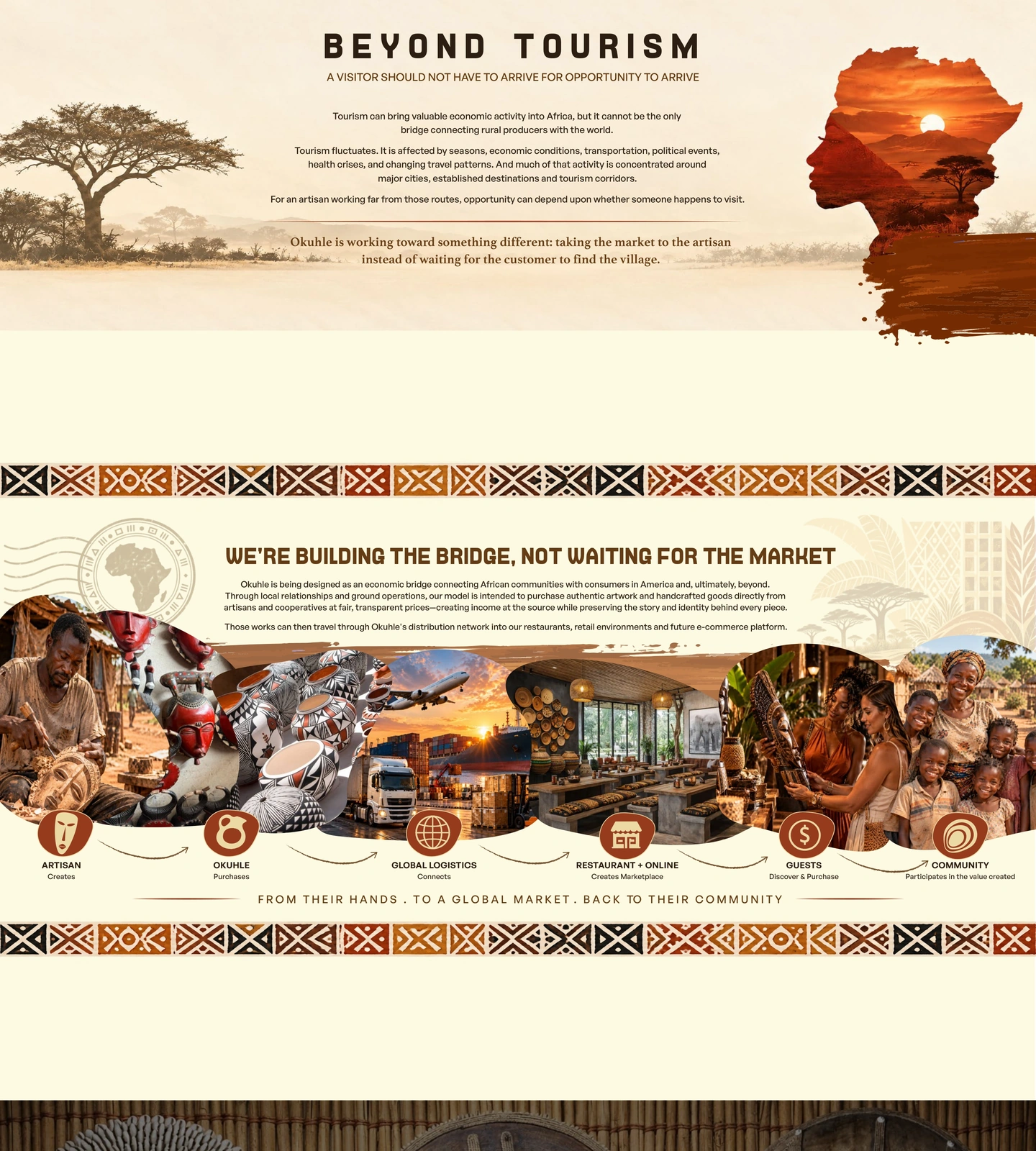
Tourism can bring valuable economic activity into Africa, but it cannot be the only bridge connecting rural producers with the world. Tourism fluctuates. It is affected by seasons, economic conditions, transportation, political events, health crises, and changing travel patterns. And much of that activity is concentrated around major cities, established destinations and tourism corridors. For an artisan working far from those routes, opportunity can depend upon whether someone happens to visit. Okuhle is working toward something different: taking the market to the artisan instead of waiting for the customer to find the village.
WE'RE BUILDING THE BRIDGE, NOT WAITING FOR THE MARKET
Okuhle is being designed as an economic bridge connecting African communities with consumers in America and, ultimately, beyond. Through local relationships and ground operations, our model is intended to purchase authentic artwork and handcrafted goods directly from artisans and cooperatives at fair, transparent prices - creating income at the source while preserving the story and identity behind every piece. Those works can then travel through Okuhle's distribution network into our restaurants, retail environments and future e-commerce platform.
FROM THEIR HANDS . TO A GLOBAL MARKET . BACK TO THEIR COMMUNITY
ARTISAN
Creates
OKUHLE
Purchases
GLOBAL LOGISTICS
Connects
RESTAURANT + ONLINE
Creates Marketplace
GUESTS
Discover & Purchase
COMMUNITY
Participates in the value created
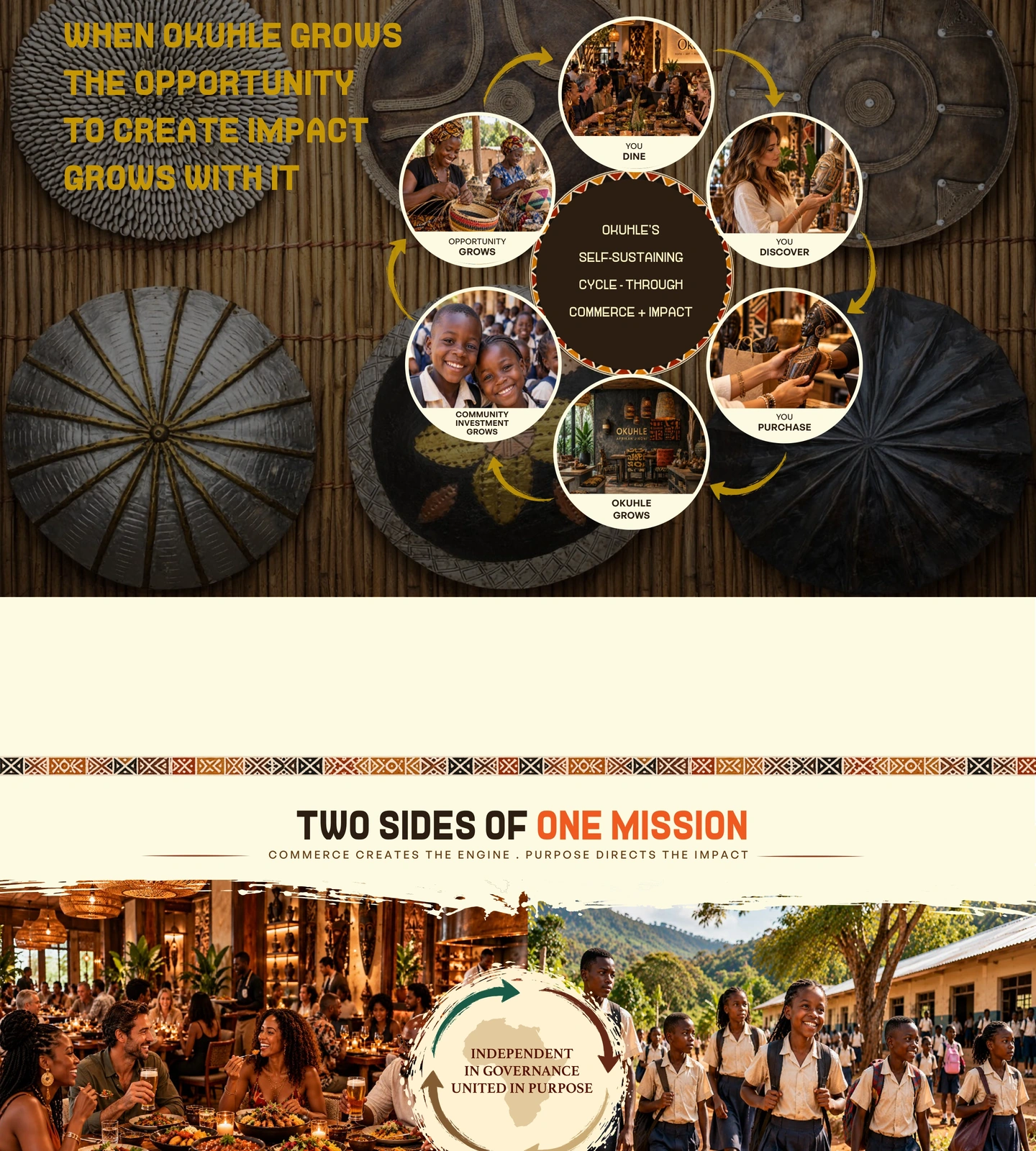
WHEN OKUHLE GROWS THE OPPORTUNITY TO CREATE IMPACT GROWS WITH IT
OKUHLE'S SELF-SUSTAINING CYCLE - THROUGH COMMERCE + IMPACT
YOU DINE → YOU DISCOVER → YOU PURCHASE → OKUHLE GROWS → COMMUNITY INVESTMENT GROWS → OPPORTUNITY GROWS
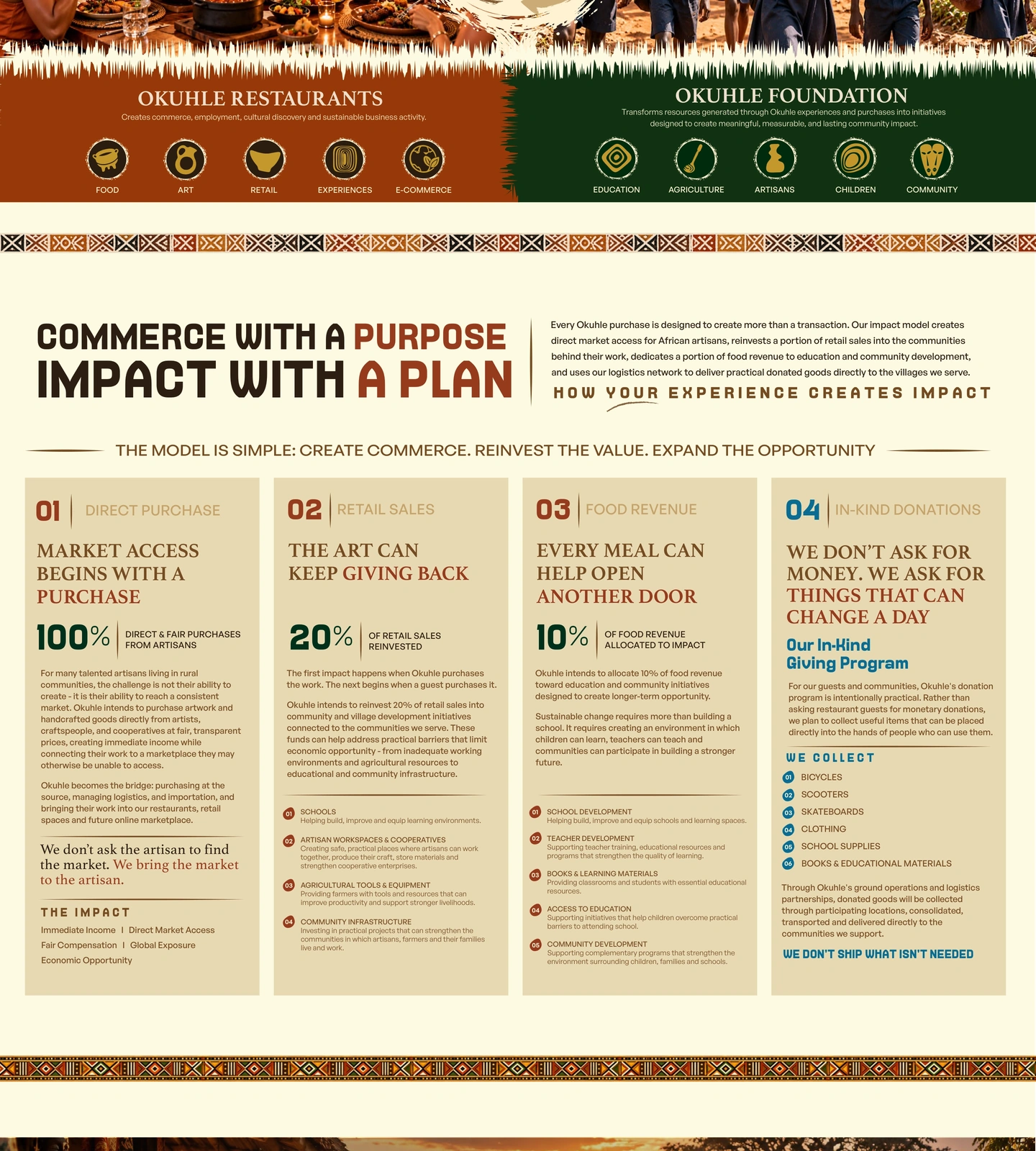
TWO SIDES OF ONE MISSION
COMMERCE CREATES THE ENGINE . PURPOSE DIRECTS THE IMPACT
INDEPENDENT IN GOVERNANCE UNITED IN PURPOSE
OKUHLE RESTAURANTS
Creates commerce, employment, cultural discovery and sustainable business activity.
FOOD · ART · RETAIL · EXPERIENCES · E-COMMERCE
OKUHLE FOUNDATION
Transforms resources generated through Okuhle experiences and purchases into initiatives designed to create meaningful, measurable, and lasting community impact.
EDUCATION · AGRICULTURE · ARTISANS · CHILDREN · COMMUNITY
COMMERCE WITH A PURPOSE IMPACT WITH A PLAN
HOW YOUR EXPERIENCE CREATES IMPACT
Every Okuhle purchase is designed to create more than a transaction. Our impact model creates direct market access for African artisans, reinvests a portion of retail sales into the communities behind their work, dedicates a portion of food revenue to education and community development, and uses our logistics network to deliver practical donated goods directly to the villages we serve.
THE MODEL IS SIMPLE: CREATE COMMERCE. REINVEST THE VALUE. EXPAND THE OPPORTUNITY
01 DIRECT PURCHASE
MARKET ACCESS BEGINS WITH A PURCHASE
100% DIRECT & FAIR PURCHASES FROM ARTISANS
For many talented artisans living in rural communities, the challenge is not their ability to create - it is their ability to reach a consistent market. Okuhle intends to purchase artwork and handcrafted goods directly from artists, craftspeople, and cooperatives at fair, transparent prices, creating immediate income while connecting their work to a marketplace they may otherwise be unable to access. Okuhle becomes the bridge: purchasing at the source, managing logistics, and importation, and bringing their work into our restaurants, retail spaces and future online marketplace.
We don't ask the artisan to find the market. We bring the market to the artisan.
THE IMPACT
Immediate Income I Direct Market Access I Fair Compensation I Global Exposure I Economic Opportunity
02 RETAIL SALES
THE ART CAN KEEP GIVING BACK
20% OF RETAIL SALES REINVESTED
The first impact happens when Okuhle purchases the work. The next begins when a guest purchases it. Okuhle intends to reinvest 20% of retail sales into community and village development initiatives connected to the communities we serve. These funds can help address practical barriers that limit economic opportunity - from inadequate working environments and agricultural resources to educational and community infrastructure.
01 SCHOOLS
Helping build, improve and equip learning environments.
02 ARTISAN WORKSPACES & COOPERATIVES
Creating safe, practical places where artisans can work together, produce their craft, store materials and strengthen cooperative enterprises.
03 AGRICULTURAL TOOLS & EQUIPMENT
Providing farmers with tools and resources that can improve productivity and support stronger livelihoods.
04 COMMUNITY INFRASTRUCTURE
Investing in practical projects that can strengthen the communities in which artisans, farmers and their families live and work.
03 FOOD REVENUE
EVERY MEAL CAN HELP OPEN ANOTHER DOOR
10% OF FOOD REVENUE ALLOCATED TO IMPACT
Okuhle intends to allocate 10% of food revenue toward education and community initiatives designed to create longer-term opportunity. Sustainable change requires more than building a school. It requires creating an environment in which children can learn, teachers can teach and communities can participate in building a stronger future.
01 SCHOOL DEVELOPMENT
Helping build, improve and equip schools and learning spaces.
02 TEACHER DEVELOPMENT
Supporting teacher training, educational resources and programs that strengthen the quality of learning.
03 BOOKS & LEARNING MATERIALS
Providing classrooms and students with essential educational resources.
04 ACCESS TO EDUCATION
Supporting initiatives that help children overcome practical barriers to attending school.
05 COMMUNITY DEVELOPMENT
Supporting complementary programs that strengthen the environment surrounding children, families and schools.
04 IN-KIND DONATIONS
WE DON'T ASK FOR MONEY. WE ASK FOR THINGS THAT CAN CHANGE A DAY
Our In-Kind Giving Program
For our guests and communities, Okuhle's donation program is intentionally practical. Rather than asking restaurant guests for monetary donations, we plan to collect useful items that can be placed directly into the hands of people who can use them.
WE COLLECT
01 BICYCLES · 02 SCOOTERS · 03 SKATEBOARDS · 04 CLOTHING · 05 SCHOOL SUPPLIES · 06 BOOKS & EDUCATIONAL MATERIALS
Through Okuhle's ground operations and logistics partnerships, donated goods will be collected through participating locations, consolidated, transported and delivered directly to the communities we support.
WE DON'T SHIP WHAT ISN'T NEEDED
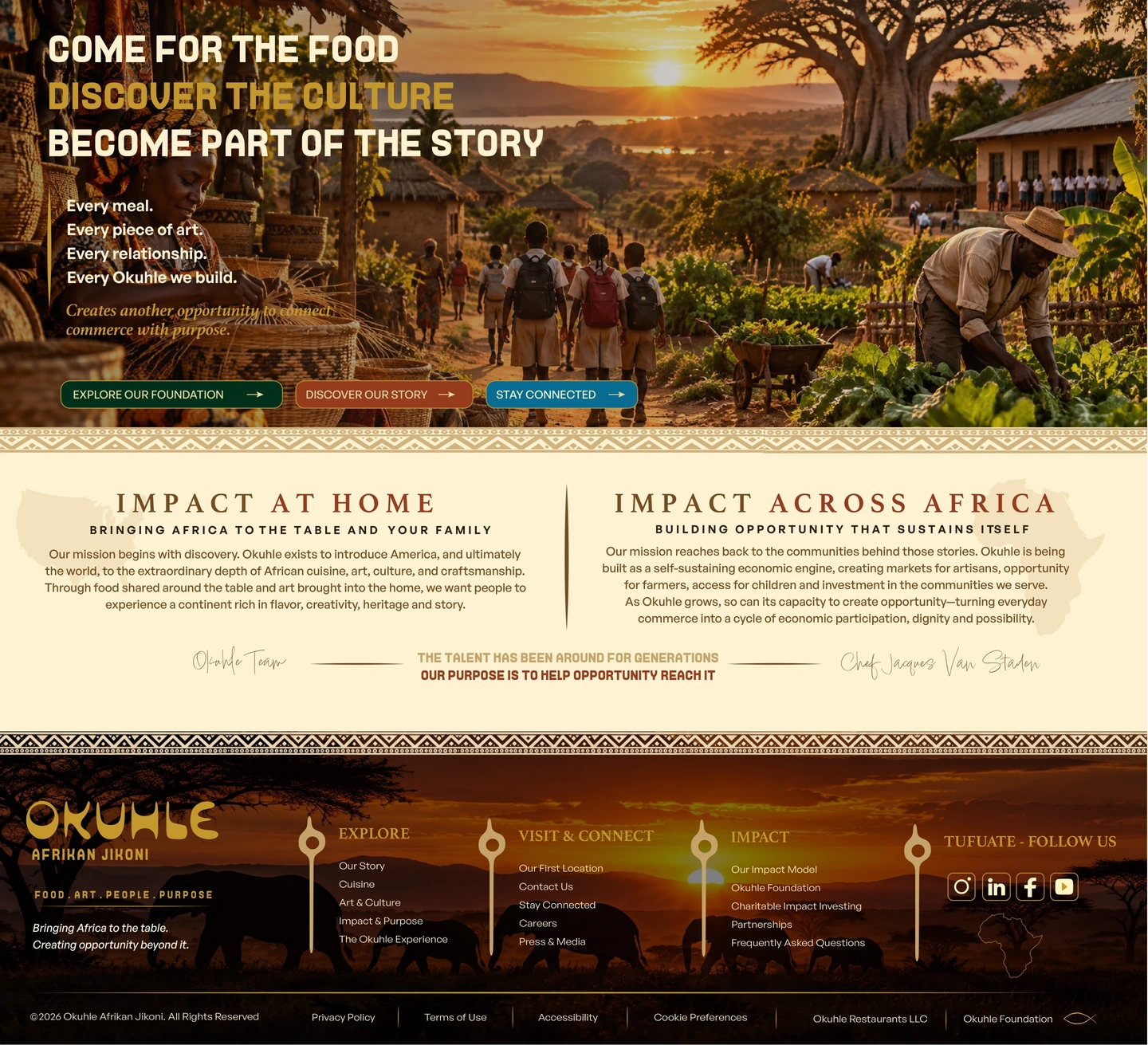
COME FOR THE FOOD DISCOVER THE CULTURE BECOME PART OF THE STORY
Every meal. Every piece of art. Every relationship. Every Okuhle we build. Creates another opportunity to connect commerce with purpose.
EXPLORE OUR FOUNDATIONDISCOVER OUR STORYSTAY CONNECTEDIMPACT AT HOME
BRINGING AFRICA TO THE TABLE AND YOUR FAMILY
Our mission begins with discovery. Okuhle exists to introduce America, and ultimately the world, to the extraordinary depth of African cuisine, art, culture, and craftsmanship. Through food shared around the table and art brought into the home, we want people to experience a continent rich in flavor, creativity, heritage and story.
IMPACT ACROSS AFRICA
BUILDING OPPORTUNITY THAT SUSTAINS ITSELF
Our mission reaches back to the communities behind those stories. Okuhle is being built as a self-sustaining economic engine, creating markets for artisans, opportunity for farmers, access for children and investment in the communities we serve. As Okuhle grows, so can its capacity to create opportunity - turning everyday commerce into a cycle of economic participation, dignity and possibility.
THE TALENT HAS BEEN AROUND FOR GENERATIONS OUR PURPOSE IS TO HELP OPPORTUNITY REACH IT
Okuhle Team · Chef Jacques Van Staden